NB: It is much easier to do this setup with the Setup Helper.
The manual instructions are for anyone who doesn't have Mac OS 10.5 (Leopard) or later installed, or who is geeky enough to want to do things manually!
A) Enable the HTTP Interface
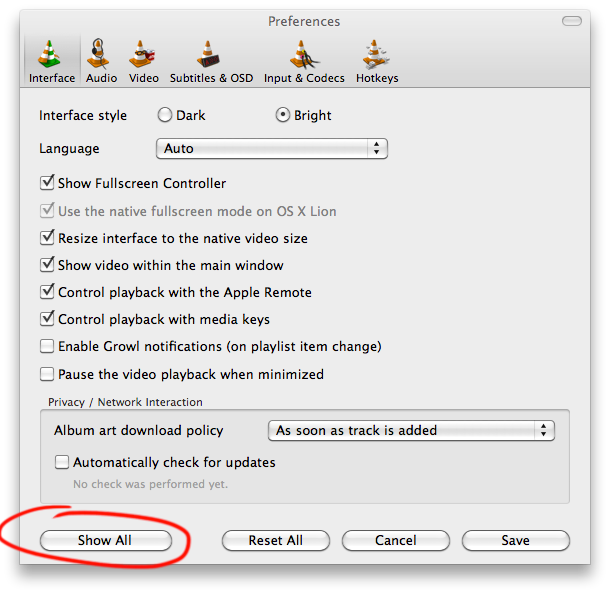
Open the VLC settings
VLC Menu/Preferences
Click 'Show All' to show the advanced settings
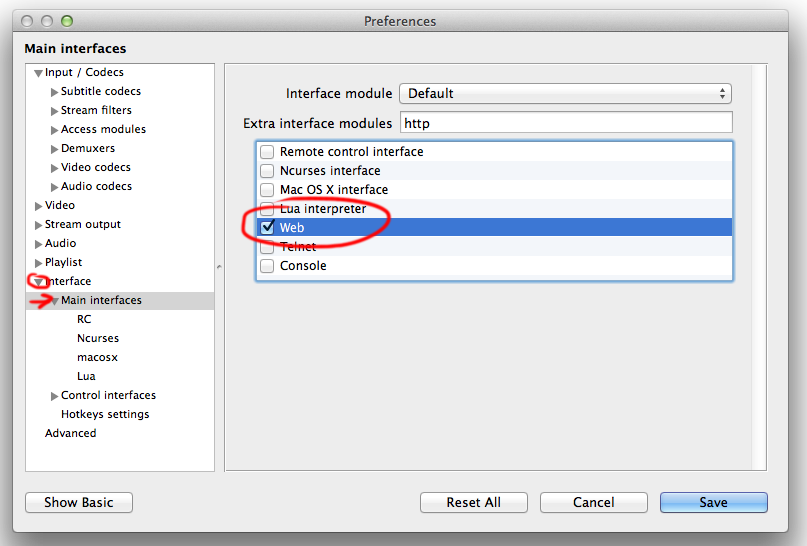
Enable the interface
Click on Interface, then Main interfaces
enter 'http' in the Extra interface modules
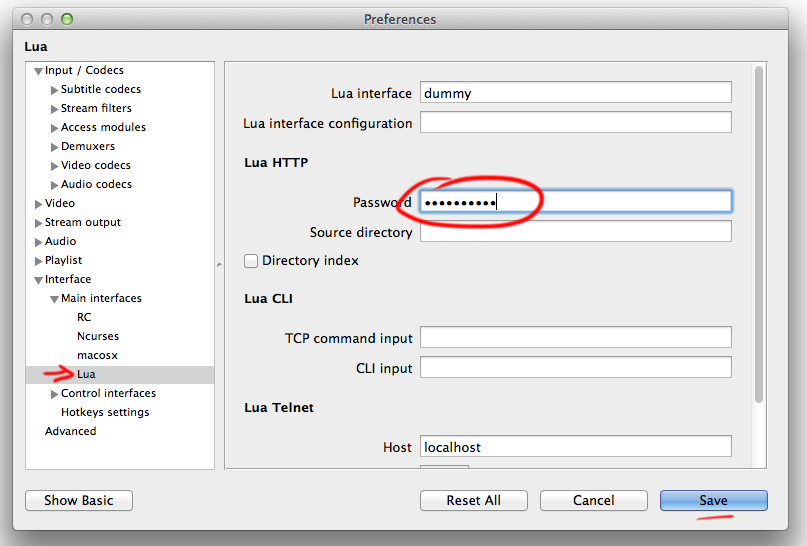
Save the preferences
Quit VLC and restart it
B) Give your phone permission to access VLC (if necessary)
Once you have enabled the http interface, press re-scan on your phone remote.
If you see a traffic cone beside the computer you are trying to control, then you can skip this step. If you see a cone with a red X through it, then you need to give your phone permission to access VLC. This probably means you have a very recent version of VLC.
VLC in the latest versions uses a file called '.hosts' to define which computers can access the VLC remote player.
Editing the .hosts file is painful as it won't show in the finder by default, so there are two approaches:
Install the app, run it and click on the 'show' option
Browse to VLC in your Applications folder
Control click on VLC and select 'Show package contents'
Navigate to /Contents/MacOS/share/lua/http/ where you should see the .hosts file
Open this file in your favourite text editor
Make the changes suggested below and save the file
Quit and restart VLC and all should work.
Using the Terminal:
Open a terminal window
Click on the spotlight in the top corner of your screen, type 'Terminal' and you should see the terminal app. It will open an input window.
Copy the following command into the window
open -e /Applications/VLC.app/Contents/MacOS/share/lua/http/.hosts
This assumes that you have VLC installed directly in your Applications folder (not in a subfolder). If you have VLC installed somewhere different, then you'll need to adjust the path above.
The hosts file should open in Text Edit. Make the changes suggested below and save the file.
Quit and restart VLC and all should work.
This is the default file (this will not allow VLC remote to access VLC)
# The world (uncommenting these 2 lines is not quite safe)
#::/0
#0.0.0.0/0
if you want to access VLC from the entire world, then remove the # in the 'The World' section. As VLC says, this is 'not quite safe' as you allow the whole world to control your VLC player.
# The world (uncommenting these 2 lines is not quite safe)
::/0
0.0.0.0/0
C) Check that your firewall allows connections to VLC
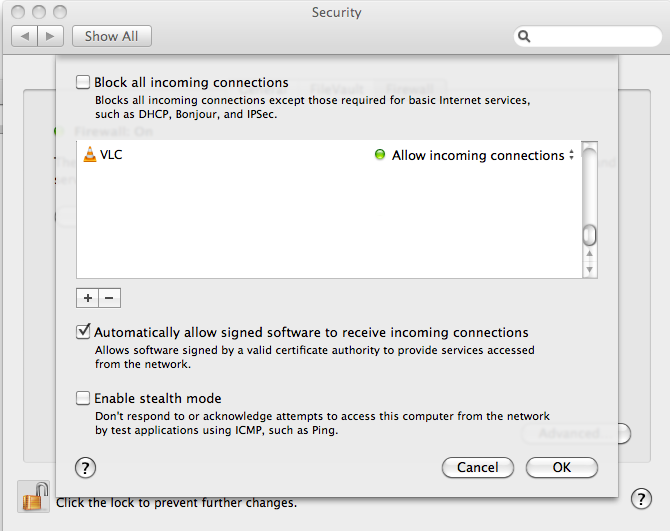
Launch the System Preferences application, then click on Security and then Firewall
The simplest option (the one I use) is to simply leave the firewall off - but assuming you have it turned on then click on the lock on the bottom left to unlock the settings, then click on advanced on the bottom right.
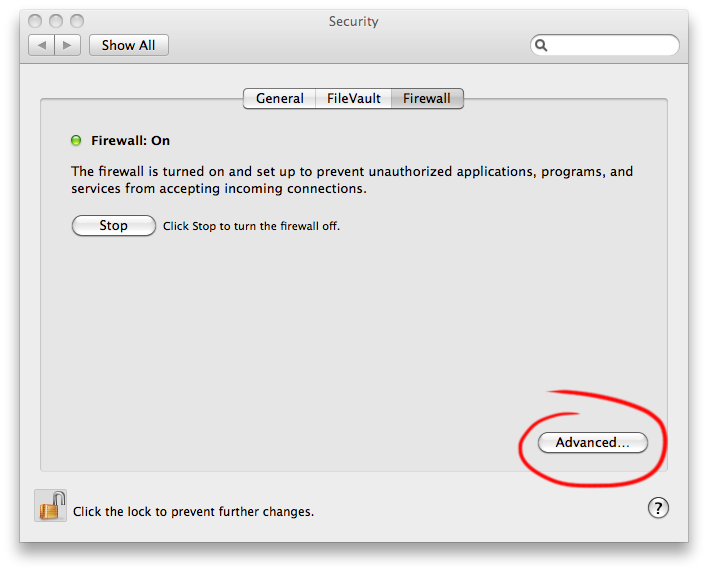
Make sure that you specify that VLC should allow incoming connections
D) That's it!
By now, you should be able to see your computer in the VLC Remotes page under 'Found Computers'. If VLC is running on your computer, then you should see a Traffic cone next to the computer entry.
You can then select that computer and control it remotely.